
Best Time to See Alaska Wildlife (Month-by-Month Guide)
"When's the best time to see wildlife in Alaska?" depends entirely on which animal you're after — bear season, whale season, and moose activity don't overlap the way people assume. Here's the real month-by-month breakdown, plus which tours actually put you in the right place at the right time.
Quick Answer
May through September covers most of Alaska's wildlife-viewing season, but the specific animal you want to see narrows that window a lot. Whales: June through August. Bears: July through September. Moose and eagles: nearly year-round, with easiest viewing in Anchorage in spring and fall.
Month-by-Month Breakdown
May — Moose are highly active as winter herds disperse, and eagles are easy to spot along waterways. Bears are just coming out of hibernation and beginning to feed, but sightings are less predictable than mid-summer. Whales are starting to arrive in Southeast Alaska waters but numbers build through June.
June — Whale-watching season ramps up meaningfully in Juneau and Southeast Alaska as humpbacks arrive to feed. Bears become more visible as salmon runs begin in some regions. Long daylight hours (up to 19+ hours) mean more viewing time regardless of species.
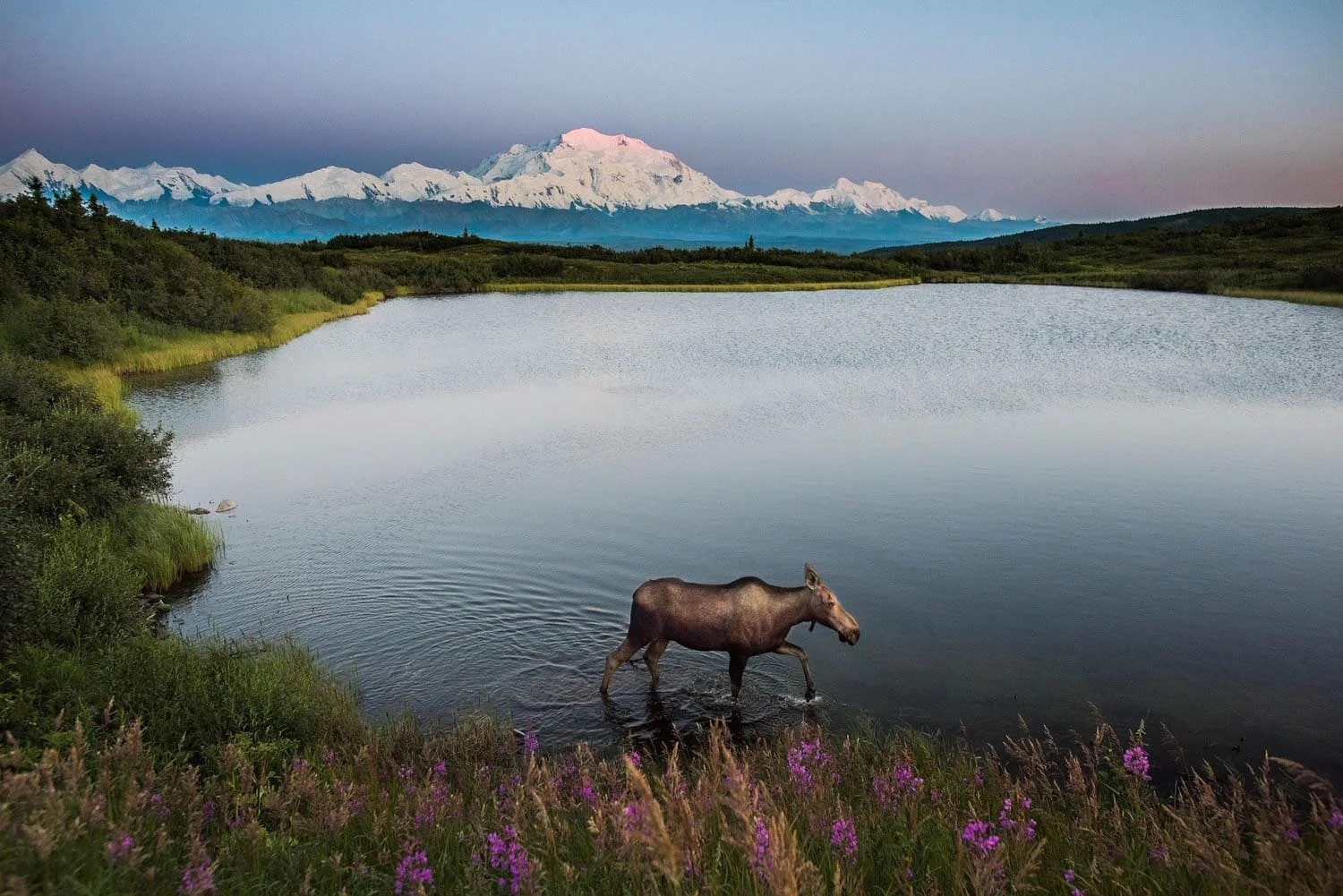
July — One of the strongest all-around wildlife months. Salmon runs are in full swing, which draws bears to rivers and creeks, making this a peak month for bear sightings on guided tours. Whale activity in Southeast Alaska is strong. This is also when we see the most guest reports of moose sightings around Anchorage and Denali-area tours.
August — Peak bear-viewing month in many parts of Alaska, as salmon runs continue and bears feed heavily ahead of fall. Whale watching remains excellent in Juneau. A great all-around month if wildlife is your main priority.
September — Whale numbers begin thinning as humpbacks start their migration south, so early September is your last strong window for whale watching. Bears are still active but less concentrated near water as salmon runs taper. Moose activity increases again as the fall rut approaches — this is one of the best months to spot moose behavior up close (from a safe, guided distance).
October through April — Wildlife viewing shifts heavily toward moose and eagles, which are visible near Anchorage and other populated areas nearly year-round, including winter. Whale and bear tours are largely off-season. If you're visiting for Northern Lights in winter, moose and eagle sightings are a realistic bonus, not something to plan a whole trip around.
Which Tours Give You the Best Odds
Sightings are never guaranteed with wild animals, but some tours put you in the right habitat far more consistently than others:
Premier Catamaran Whale Watch (Juneau) and Whales and Lunch! — both run June through August/September, the core humpback season in Southeast Alaska.
3 Hour Naturalist Walking Tour (Denali) — a guided walk with a naturalist who knows where wildlife tends to concentrate, best July through September.
Anchorage-area tours in general — moose and eagle sightings are common as a bonus almost any time of year, since moose regularly wander through populated parts of Anchorage itself.
A Realistic Note on Sightings
Any honest operator will tell you: wildlife tours improve your odds, they don't guarantee a specific animal on a specific day. Guides know the habitats, timing, and behavior patterns, which is a real advantage over trying to spot wildlife independently — but Alaska's animals don't work on a tourist schedule.
Ready to Plan Your Trip Around Wildlife?
Browse whale watching, naturalist walks, and other wildlife-focused tours here, or call/text us at 907-350-3104 and tell us what you're hoping to see — we'll help you pick dates and tours that actually line up with it.