
What to Pack for Alaska in Each Season
Packing for Alaska depends entirely on when you’re visiting. Each season has its own weather patterns, daylight levels, and outdoor activities — and coming prepared makes all the difference between a comfortable adventure and a chilly surprise.
This 2026 packing guide breaks down exactly what to bring for summer, fall, winter, and spring, including clothing, footwear, travel essentials, and activity-specific items. Whether you’re chasing the northern lights or exploring Alaska’s summer trails, here’s everything you need.
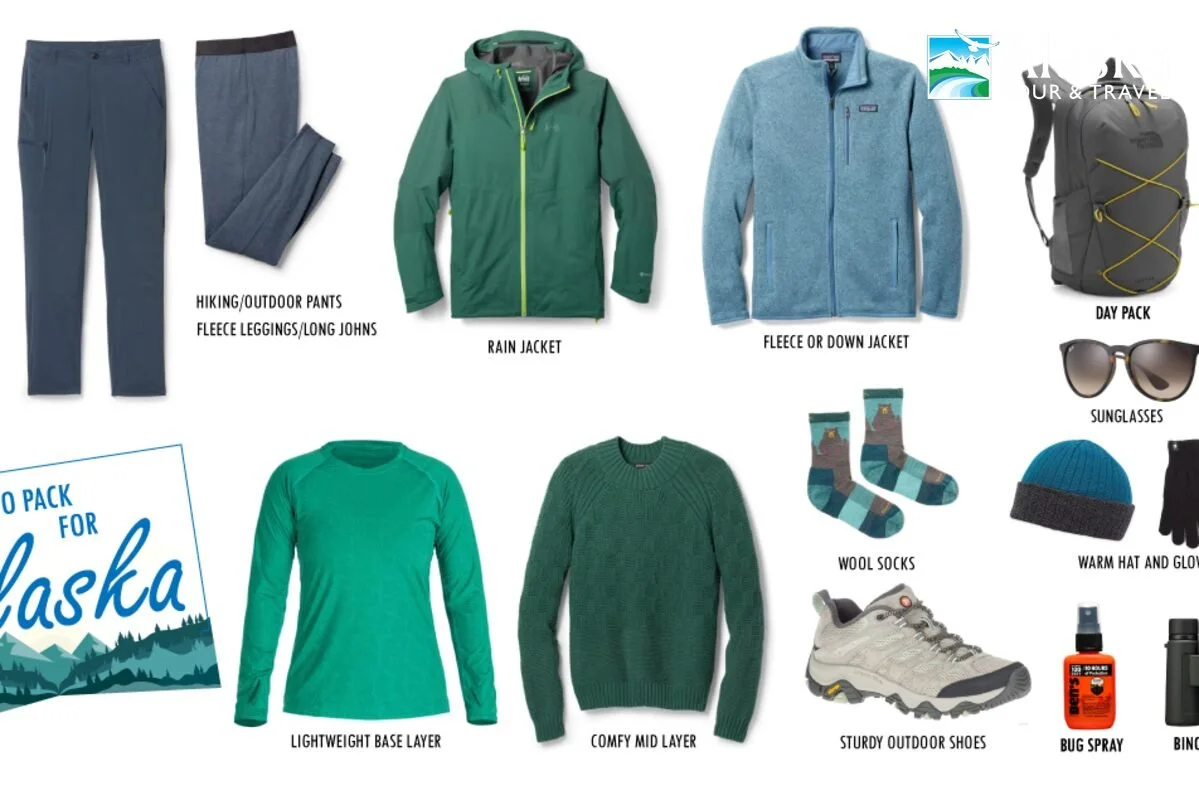
Why Packing for Alaska Is Different
Alaska isn’t just colder — it’s dramatically more unpredictable. You might get sunshine, rain, wind, and fog all in the same afternoon. That’s why layering is a must, no matter the season.
And if you’re booking tours, check out the full list here: All Tours
Most include gear, but smart packing makes your trip easier.
What to Pack for Alaska in Summer (June–August)
Summer is Alaska’s busiest season, with long daylight, warm afternoons, and cool nights. Temperatures generally range from 55°F to 75°F, with occasional rain showers.
Essential Summer Packing List
Lightweight waterproof jacket
Fleece layer or softshell
Quick-dry shirts
Hiking pants or leggings
Comfortable walking shoes or hiking boots
Sunglasses + sunscreen
Bug spray (mosquitoes can be intense)
Daypack for hikes and tours
Optional but Useful
Binoculars for wildlife
Reusable water bottle
Camera or smartphone tripod
Summer Activities That Need Extra Gear
ATV Adventures → Wear clothing you don’t mind getting dusty
K2 Aviation Flightseeing → Bring a warm mid-layer for glacier landings
Glacier Tours → Waterproof gloves + a hat
Summer is all about comfort and mobility — think layers, not bulk.
What to Pack for Alaska in Fall (September–October)
Fall in Alaska is crisp, colorful, and transitional. Expect temperatures between 35°F and 55°F, with longer nights starting in mid-September.
Essential Fall Packing List
Insulated jacket (light to mid-weight)
Waterproof outer layer
Warm hat + gloves
Long-sleeve shirts
Wool or thermal socks
Waterproof hiking boots
Fall is also aurora season, meaning you’ll be outside at night.
Nighttime Essentials
Hand warmers
Extra layers for standing still
Portable power bank for aurora photos
If you’re planning to chase the northern lights, check out:
Guides usually provide blankets, warm vehicles, and hot drinks — but layering is still key.
What to Pack for Alaska in Winter (November–March)
Winter in Alaska is stunning — deep snow, clear skies, and the strongest aurora displays of the year. Temperatures vary widely but often fall between 0°F and 30°F, with colder snaps inland.
Essential Winter Packing List
Heavy insulated parka
Thermal base layers (top + bottom)
Sweater or fleece mid-layer
Waterproof insulated boots
Wool socks
Winter hat, gloves, and neck gaiter
Hand warmers
Traction cleats (for icy sidewalks)
For Northern Lights Viewing
Extra layers for standing outside
Balaclava for wind protection
Portable tripod for long-exposure shots
See available aurora experiences here: Northern Lights Tours
For Winter Glacier Tours
Waterproof pants
Extra gloves
Sunglasses (snow glare is strong)
Link: Glacier Tours
Winter packing is all about insulation + wind protection.
What to Pack for Alaska in Spring (April–May)
Spring brings melting snow, wildlife activity, and moderate temperatures between 35°F and 55°F. Conditions vary: you may encounter snow, rain, and cold mornings all in one trip.
Essential Spring Packing List
Waterproof jacket
Light insulated layer
Waterproof hiking boots
Long pants
Warm hat (mornings and evenings are chilly)
For Adventure Tours
ATV Adventures: waterproof outer layers
Glacier Tours: warm inner layers under a shell
All Tours: check operator gear lists
Spring is an excellent time for wildlife viewing, so binoculars and a zoom lens are handy.
Activity-Specific Packing Tips (Year-Round)
For Glacier Tours
Waterproof shells
Warm gloves
Hat + sunglasses
Book here: Glacier Tours
For Flightseeing Tours
Warm mid-layer
Sunglasses for glare
Camera with clean lens cloth
Book here: K2 Aviation Flightseeing
For ATV Adventures
Closed-toe shoes
Layers you don’t mind getting dusty or muddy
Light gloves in cooler months
Book here: ATV Adventures
For Northern Lights Tours
Heavy layers (winter) or mid-layers (fall)
Extra batteries
Hand warmers
Book here: Northern Lights Tours
General Alaska Packing Rules (Every Season)
✔️ Layer everything
✔️ Choose waterproof over warm if you can’t bring both
✔️ Wear comfortable footwear
✔️ Avoid cotton (stays wet and cold)
✔️ Plan for sudden weather changes
✔️ Pack one warm layer even in summer
Alaska rewards those who pack smart — and surprises those who don’t.
Final Tip: Base Your Packing on Your Activities
Your exact packing list will depend on the tours you choose. To stay prepared, start by browsing the options here:
For more travel advice, visit our FAQs page or learn more about our local expertise in the About Us section.