
How to See the Northern Lights in Alaska (Beginner’s Guide)
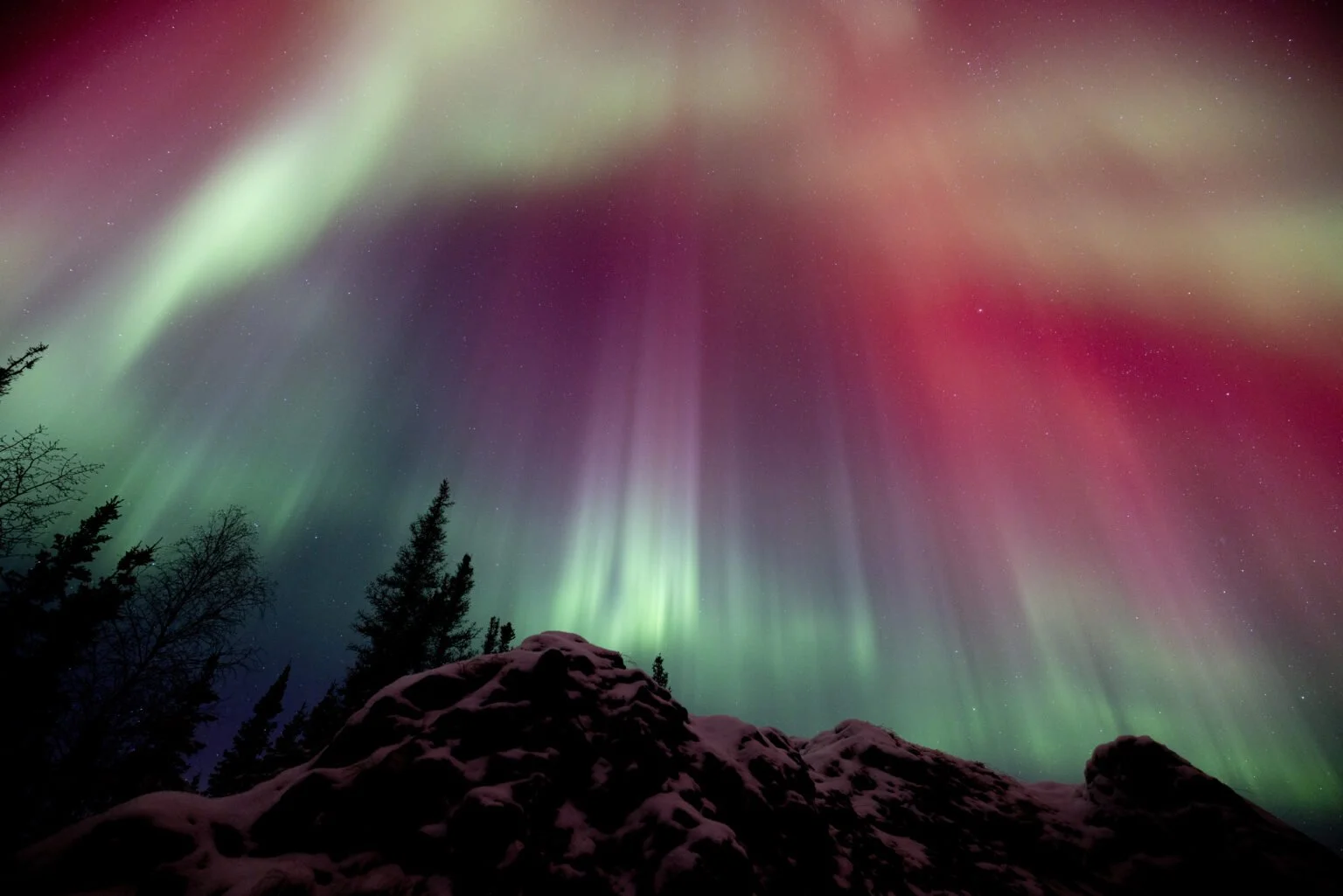
Seeing the Northern Lights is one of those experiences that stays with you forever. The swirling greens, purples, and reds dancing across a dark Alaska sky—it's pure magic. But if you've never chased the aurora before, you probably have questions. Where do you go? When should you visit? What do you actually need to know to maximize your chances?
This is your complete beginner's guide to seeing the Northern Lights in Alaska. Whether you're planning your first aurora trip or just dreaming about it, this guide covers everything you need to know to make it happen.
🌌 What Are the Northern Lights?
The Northern Lights (aurora borealis) happen when charged particles from the sun collide with gases in Earth's atmosphere. The result is those ribbons and curtains of light that seem to move and dance across the night sky.
Different gases create different colors:
Green (most common) – Oxygen at lower altitudes
Red – Oxygen at higher altitudes
Blue/Purple – Nitrogen
Alaska sits directly under the Auroral Oval, a ring-shaped zone around the North Pole where aurora activity is strongest. This makes Alaska one of the most reliable places on Earth to see the Northern Lights.
The lights can appear any time after dark during the aurora season, but they're strongest around midnight. Some displays last just a few minutes. Others go on for hours.
Why Alaska Is Perfect for Northern Lights Viewing
Alaska has several advantages that make it one of the best aurora destinations in the world:
Geographic position: Much of Alaska sits directly under the auroral oval where displays are frequent and intense.
Dark skies: Large parts of Alaska have minimal light pollution, which means darker skies and better viewing.
Accessible locations: Unlike some aurora destinations in remote corners of the Arctic, Alaska has good infrastructure, comfortable accommodations, and easy access from major airports.
Long aurora season: From late August through early April, Alaska gets enough darkness for Northern Lights viewing—that's roughly 8 months of potential viewing opportunities.
Expert guides: Local tour operators know the weather patterns, best viewing locations, and how to track aurora activity in real time.
If you want the highest chance of seeing a great display, Alaska should be at the top of your list.
Best Places to See the Northern Lights in Alaska
Fairbanks
Fairbanks is the Northern Lights capital of Alaska—and arguably of North America. Located just south of the Arctic Circle, Fairbanks gets aurora displays an average of 240+ nights per year during aurora season.
The combination of location, clear skies, and dark nights makes Fairbanks the top choice for serious aurora hunters. If you only have a couple of nights and want the best odds, Fairbanks is where you should go.
Anchorage
Anchorage is more accessible for most travelers since it's the main gateway city. While aurora displays happen less frequently here than in Fairbanks, you can still see incredible shows—especially during strong geomagnetic activity.
The advantage of Anchorage is convenience. You can combine Northern Lights viewing with other activities like glacier tours, wildlife viewing, and flightseeing.
If you're booking a Northern Lights tour from Anchorage, guides will drive you away from city lights to darker viewing locations.
→ Book an Anchorage Northern Lights Tour
Talkeetna
Talkeetna sits about two hours north of Anchorage and offers darker skies with easier access than Fairbanks. It's a sweet spot for travelers who want good aurora chances without the longer travel time to Fairbanks.
The town itself is charming, and on clear nights you might see both the Northern Lights and Denali in the same view.
Other Good Locations
Denali National Park area – Dark skies, beautiful backdrop
Coldfoot – Far north on the Dalton Highway, excellent viewing
Nome – Remote but incredible aurora activity
Chena Hot Springs – Combine aurora viewing with soaking in natural hot springs
The key is getting away from light pollution. Even smaller towns can create enough glow to interfere with viewing.
When to See the Northern Lights in Alaska
Best Months
The Northern Lights season in Alaska runs from late August through early April. You need darkness to see the aurora, and Alaska has near-constant daylight in summer, so viewing isn't possible from May through early August.
Top months for Northern Lights:
September – Excellent; fall colors, mild weather, long nights
October – Prime time; very dark, relatively clear weather
February – Peak season; stable weather, deep darkness
March – Excellent; clearer skies, slightly warmer temperatures
Good months:
November, December, January – Very dark but colder and sometimes cloudier
Possible but limited:
Late August, early April – Nights just barely dark enough
For a complete breakdown of what to expect each month, check out our Month-by-Month Northern Lights Guide.
Best Time of Night
The Northern Lights can appear anytime after dark, but activity tends to peak between 10 PM and 2 AM. This is when geomagnetic disturbances are typically strongest.
That said, displays can happen earlier or later. If you're on a guided tour, your guide will monitor aurora forecasts and alerts to time your viewing window as accurately as possible.
Plan to stay out for at least 2–3 hours. Aurora displays often come in waves—you might see nothing for 30 minutes, then suddenly the sky explodes with color.
What Affects Your Chances of Seeing the Aurora
Several factors determine whether you'll see the Northern Lights on any given night:
1. Solar Activity
The sun needs to be active and sending charged particles toward Earth. Solar activity follows an 11-year cycle, and we're currently in an active phase (2024–2026), which means stronger and more frequent displays.
You can check the Kp Index, which measures geomagnetic activity on a scale of 0–9. Higher numbers mean stronger aurora activity:
Kp 0–2: Weak activity; visible near the Arctic Circle
Kp 3–4: Moderate; visible across most of Alaska
Kp 5+: Strong; visible across Alaska and even into lower latitudes
2. Weather and Cloud Cover
This is the biggest variable. You can have a Kp 7 solar storm, but if clouds cover the sky, you won't see anything.
Alaska weather is notoriously unpredictable. This is why many travelers plan for multiple nights of viewing—if one night is cloudy, you have backup opportunities.
Guided tours often have the flexibility to relocate to areas with clearer skies, which dramatically increases your success rate.
3. Light Pollution
City lights wash out faint aurora displays. Even Anchorage, which isn't a huge city, creates enough light pollution that you need to drive 30–60 minutes away for the best viewing.
If you're on your own, use a light pollution map to find dark sky areas. If you're on a tour, your guide will handle this.
4. Moon Phase
A full moon isn't a dealbreaker, but it does make the sky brighter, which can reduce the visibility of weaker displays. New moon nights offer the darkest skies.
That said, many spectacular aurora shows happen during bright moon phases—the aurora just needs to be strong enough to outshine the moonlight.
How to Check Aurora Forecasts
Before heading out for Northern Lights viewing, check these resources:
University of Alaska Fairbanks Aurora Forecast
This is the go-to resource. It provides:
3-day aurora forecast for Alaska
Real-time Kp Index
Aurora oval predictions
URL: https://www.gi.alaska.edu/monitors/aurora-forecast
NOAA Space Weather Prediction Center
Provides detailed solar activity data and geomagnetic storm warnings.
URL: https://www.swpc.noaa.gov/
Aurora Apps
My Aurora Forecast – Free app with real-time alerts
Aurora Alert – Another solid option with notifications
Aurora Notifier – Simple and reliable
Most guided Northern Lights tours monitor these forecasts continuously and will adjust timing or location based on current conditions.
Should You Book a Northern Lights Tour?
If you're visiting Alaska specifically to see the Northern Lights, booking a tour is highly recommended—especially for first-timers.
Here's why:
Local Expertise
Guides know the area intimately. They know which roads lead to dark viewing spots, where clouds tend to clear, and how to read weather patterns. This knowledge makes a huge difference.
Real-Time Adjustments
If clouds roll in at your planned location, a good guide will relocate to a clearer area. If you're on your own, you're stuck.
Comfort and Safety
Winter nights in Alaska can drop to -20°F or colder. Tours provide warm vehicles, hot drinks, and proper gear. You're not standing in the freezing cold for hours hoping the sky clears.
Photography Help
Most tours include photography assistance. Northern Lights photography requires specific camera settings, and guides can help you capture the moment properly.
No Driving in the Dark
Alaska roads can be icy and remote. Letting someone else handle the driving—especially late at night in winter—is safer and less stressful.
→ Explore Greatland Northern Lights Tours
What to Wear on a Northern Lights Tour
Alaska winter nights are brutally cold. Proper clothing isn't optional—it's essential.
Layering System
Base layer: Thermal underwear (top and bottom)
Mid layer: Fleece or wool sweater
Outer layer: Insulated, windproof jacket and snow pants
Extremities
Warm boots – Insulated, waterproof, rated for sub-zero temperatures
Wool socks – Bring an extra pair
Insulated gloves – Consider hand warmers inside
Warm hat – Covers your ears
Neck gaiter or scarf
Extras
Hand warmers and toe warmers
Extra batteries (cold drains them fast)
Thermos with hot drink
Headlamp with red light (doesn't ruin night vision)
Many tours provide additional gear like parkas or blankets, but it's better to overdress than be cold.
For more detailed packing advice, visit our Alaska Travel FAQ.
Northern Lights Photography Tips for Beginners
Want to capture the aurora? Here's what you need to know:
Camera Settings
Manual mode
Wide aperture (f/2.8 or lower if possible)
ISO: Start at 1600–3200 and adjust
Shutter speed: 5–15 seconds (longer for faint displays, shorter for bright/moving displays)
Focus: Manual focus set to infinity
Gear You'll Need
DSLR or mirrorless camera (phone cameras can capture aurora but not well)
Wide-angle lens (14–24mm is ideal)
Sturdy tripod (essential for long exposures)
Remote shutter or timer (reduces camera shake)
Extra batteries (cold kills battery life)
Composition Tips
Include foreground elements like trees, mountains, or cabins to add depth and scale. The aurora alone is beautiful, but context makes the shot more compelling.
Most guided tours include photography assistance and will help you dial in your settings.
How Long Should You Plan for Northern Lights Viewing?
If you're serious about seeing the aurora, plan for at least 3 nights of viewing attempts.
Here's why:
Weather is unpredictable – Clouds can block the sky for multiple nights
Solar activity varies – Some nights are simply quieter than others
You want options – More nights = more chances
Many travelers book 4–5 nights in Fairbanks during peak season. This gives them enough buffer to work around weather and increases their odds to near certainty.
If you only have one or two nights, you can still see the aurora—it's just riskier. Choose your dates during high solar activity periods if possible.
Can You See the Northern Lights from Anchorage?
Yes, but less reliably than from Fairbanks.
Anchorage is farther south and has more light pollution. You'll need:
Moderate to strong solar activity (Kp 3+)
Clear skies
Dark viewing location outside the city
When conditions align, displays can be spectacular. But if you only have a couple of nights, Fairbanks is the safer bet.
If you're based in Anchorage and want to maximize your chances, book a tour that drives to darker locations away from the city.
→ Book a Northern Lights Tour from Anchorage
Northern Lights Myths and Misconceptions
Myth: You can only see the Northern Lights in winter
Truth: You can see them from late August through early April. September and March are excellent months with milder weather than deep winter.
Myth: The Northern Lights make sounds
Truth: There are occasional reports of crackling or whooshing sounds, but these are extremely rare and not well understood. Most people never hear anything.
Myth: You need total darkness
Truth: Darker is better, but strong aurora displays can be visible even with moonlight or light pollution.
Myth: The aurora looks the same as in photos
Truth: Photos often show more vivid colors because cameras capture light differently than human eyes. In person, aurora displays are often softer greens and whites, though strong displays can show vibrant colors.
Myth: Northern Lights tours guarantee sightings
Truth: No tour can guarantee aurora sightings because solar activity and weather are unpredictable. However, reputable tours maximize your chances through expert planning.
What Else Can You Do in Alaska During Aurora Season?
If you're visiting Alaska in winter for the Northern Lights, there are plenty of other incredible activities to fill your days:
Winter Adventures
Dog sledding – Experience Alaska's official state sport
Snowmobiling – Explore backcountry winter landscapes
Ice fishing – Try your hand at this local tradition
Skiing and snowboarding – Alyeska Resort near Anchorage is world-class
Ice climbing – For the adventurous
→ Explore all Winter Tours
Year-Round Activities
Flightseeing – Stunning in winter with snow-covered peaks
Wildlife viewing – Moose, caribou, and other animals are active
Cultural experiences – Visit museums and learn about Alaska Native heritage
Chena Hot Springs – Soak in natural hot springs while watching for aurora
→ Browse All Alaska Tours
How Much Does a Northern Lights Trip to Alaska Cost?
Costs vary depending on when you visit and how long you stay, but here's a rough breakdown:
Flights to Alaska
From West Coast: $300–$600 round trip
From East Coast: $500–$900 round trip
International: $700–$1,500+
Fairbanks typically requires a connecting flight through Anchorage or Seattle.
Accommodations
Budget hotels: $80–$120/night
Mid-range hotels: $120–$200/night
Lodges and resorts: $200–$400+/night
Northern Lights Tours
Standard tours: $100–$150 per person
Premium tours: $200–$300 per person
Multi-night packages: $500–$1,200
Food and Extras
Meals: $50–$100/day
Car rental (if needed): $50–$80/day
Winter gear rental: $20–$50/day
Total estimated cost for a 4-night aurora trip: $1,500–$3,000 per person
Traveling in shoulder season (September or March) can save you 20–30% compared to peak winter months.
Best Aurora Viewing Combinations
Quick Aurora Trip (3–4 days)
Fly into Fairbanks
Book 2–3 nights of Northern Lights tours
Add one daytime activity (dog sledding, hot springs, or ice museum)
Fly home
Anchorage + Aurora (5–7 days)
Arrive in Anchorage
Explore the city for 1–2 days
Book Northern Lights tours for 2–3 nights
Add winter activities or flightseeing
Depart from Anchorage
Complete Alaska Winter Experience (7–10 days)
Arrive in Anchorage
Drive or fly to Fairbanks (3–4 nights for aurora viewing)
Return to Anchorage area
Add winter adventures (dog sledding, snowmobiling, glacier tours)
Explore Anchorage before departure
Frequently Asked Questions
What's the best month to see the Northern Lights in Alaska?
February and March offer the best combination of clear weather, dark skies, and strong solar activity. September and October are also excellent with milder temperatures.
Can you see the Northern Lights in summer?
No. Alaska has nearly 24-hour daylight from May through early August, which makes aurora viewing impossible. The season runs from late August through early April.
How long do Northern Lights displays last?
It varies. Some displays last just 10–15 minutes. Others go on for hours. On average, plan to be out for 2–4 hours to catch the best activity.
Do I need a tour to see the Northern Lights?
No, but it's highly recommended for first-timers. Tours provide local expertise, transportation, comfort, and significantly better chances of success.
What if it's cloudy?
Clouds are the biggest obstacle to aurora viewing. This is why booking multiple nights is important—it gives you backup opportunities if one night is cloudy.
Is Fairbanks or Anchorage better for Northern Lights?
Fairbanks has much better odds due to its northern location and clearer winter skies. Anchorage works if you want to combine aurora viewing with other activities, but Fairbanks is superior for dedicated aurora trips.
Can you see the Northern Lights from a cruise ship?
Not during typical cruise season (May–September). Alaska cruises run during summer when there isn't enough darkness.
What camera settings should I use?
Start with manual mode, f/2.8 aperture, ISO 1600–3200, and 5–15 second shutter speed. Adjust based on aurora brightness.
Final Tips for First-Time Northern Lights Chasers
Be Patient
The aurora doesn't follow a strict schedule. You might wait for an hour and see nothing, then suddenly the sky lights up. Patience pays off.
Dress Warmer Than You Think
It's easy to underestimate how cold standing still in Alaska winter feels. Layer up and bring extras.
Book Multiple Nights
Weather and solar activity are unpredictable. More nights = better odds.
Choose a Reputable Tour
Not all tours are equal. Look for operators with local expertise, good reviews, and flexible rescheduling policies.
Stay Off Your Phone
Blue light from screens ruins your night vision. Give your eyes 15–20 minutes to adjust to darkness, then keep the phone away.
Enjoy the Moment
Yes, take photos—but also just watch. The Northern Lights are one of nature's most incredible shows. Don't spend the whole time behind a camera.
Ready to See the Northern Lights in Alaska?
Seeing the aurora borealis is a bucket-list experience that lives up to the hype. Alaska offers some of the most reliable and spectacular Northern Lights viewing on the planet, and with the right planning, your chances of success are excellent.
Whether you choose Fairbanks for maximum aurora odds or Anchorage for convenience and variety, you're in for something unforgettable.
Next steps:
Decide on your travel dates (aim for September, February, or March)
Book your flights and accommodations
Reserve your Northern Lights tours in advance
Prepare your gear and camera settings
Get ready for one of the most magical experiences of your life
→ Book your Northern Lights Tour
→ Explore Winter Adventures in Alaska
→ Have questions? Check our FAQ or Contact Us
The Northern Lights are waiting. Alaska is ready. Let's make it happen.