
Alaska on a Budget: How to Explore Without Breaking the Bank
Alaska on a Budget: How to Explore Without Breaking the Bank
Alaska has a reputation for being expensive—and to be fair, it can be. But here's the truth: you don't need unlimited funds to experience the magic of the Last Frontier. With smart planning, strategic timing, and knowing where to spend (and where to save), you can explore Alaska's glaciers, wildlife, and wilderness without emptying your bank account.
This guide breaks down exactly how to do Alaska on a budget. We're talking real strategies that work—not just generic "pack sandwiches" advice. Whether you're dreaming of seeing the Northern Lights, hiking on glaciers, or watching bears fish for salmon, this guide will show you how to make it happen affordably.
Ready to start browsing? Check out our affordable Alaska tours → — we've handpicked the best experiences at every price point.
💰 Is Alaska Really That Expensive?
Let's be honest: Alaska isn't cheap. Accommodations cost more than the Lower 48. Flights can be pricey. Tours and activities add up quickly. But "expensive" and "unaffordable" are two different things.
The key is understanding where costs come from and how to work around them:
Peak season pricing – July and August are the most expensive months
Remote locations – Farther from Anchorage = higher prices
Limited competition – Some areas have few lodging or tour options
Transportation – Alaska is huge; getting around costs money
The good news? With the right approach, you can cut costs by 30–50% compared to typical Alaska trips.
Best Time to Visit Alaska on a Budget
Timing is everything when it comes to budget travel in Alaska.
Shoulder Season = Best Value
May and September are the sweet spots:
Accommodations cost 20–40% less than peak summer
Tours offer shoulder season discounts
Flights are cheaper
Attractions are less crowded
Weather is still good (mild temps, long daylight)
What you get:
May: Melting snow, emerging wildlife, blooming wildflowers
September: Fall colors, Northern Lights returning, fewer tourists
What you sacrifice:
Slightly cooler temperatures
Some tours may have limited schedules
A few attractions might not be open yet (May) or closing soon (September)
For most budget travelers, this trade-off is absolutely worth it.
Winter = Rock-Bottom Prices
November through March (excluding holidays) offers the lowest prices:
Hotels drop rates by 50% or more
Flights are significantly cheaper
Winter-specific experiences (Northern Lights, dog sledding) are available
The catch:
Very cold temperatures
Limited daylight (especially December/January)
Many summer activities unavailable
Some roads and areas closed
Winter works great if you're specifically coming for Northern Lights or winter sports.
Planning a winter trip? Browse our Northern Lights tours — some of the most affordable and unforgettable experiences Alaska has to offer.
Avoid Peak Season If Possible
Late June through mid-August is the most expensive time:
Hotels can cost double shoulder season rates
Tours fill up (less discount availability)
Rental cars are at premium prices
Everything from restaurants to attractions charges more
If your dates are flexible at all, avoid these weeks.
Budget-Friendly Transportation in Alaska
Getting to and around Alaska is often the biggest expense. Here's how to minimize it.
Finding Cheap Flights to Alaska
Book early: 3–6 months ahead for best prices
Be flexible with dates: Even shifting by a few days can save $200+
Use flight comparison tools: Google Flights, Kayak, Skyscanner
Consider indirect routes: Sometimes flying into Seattle or Portland and catching a budget Alaska flight saves money
Best budget airlines to Alaska:
Alaska Airlines (frequent sales)
Delta (sometimes matches Alaska pricing)
Southwest (if they add Alaska routes—check occasionally)
Pro tip: Sign up for Alaska Airlines email alerts. They run sales several times per year with significantly discounted fares.
Rental Cars: How to Save
Book early: Prices skyrocket as availability decreases
Compare all companies: Major chains, local companies, and Costco Travel (if you're a member)
Skip unnecessary add-ons: You probably don't need 4WD for most Alaska trips, your credit card may cover rental insurance, and skip the GPS (use your phone)
Consider car sharing: If traveling solo, find other travelers to split costs
Average costs:
Peak season: $70–$100/day
Shoulder season: $40–$60/day
Weekly rentals: Better daily rates
Public Transportation and Shuttles
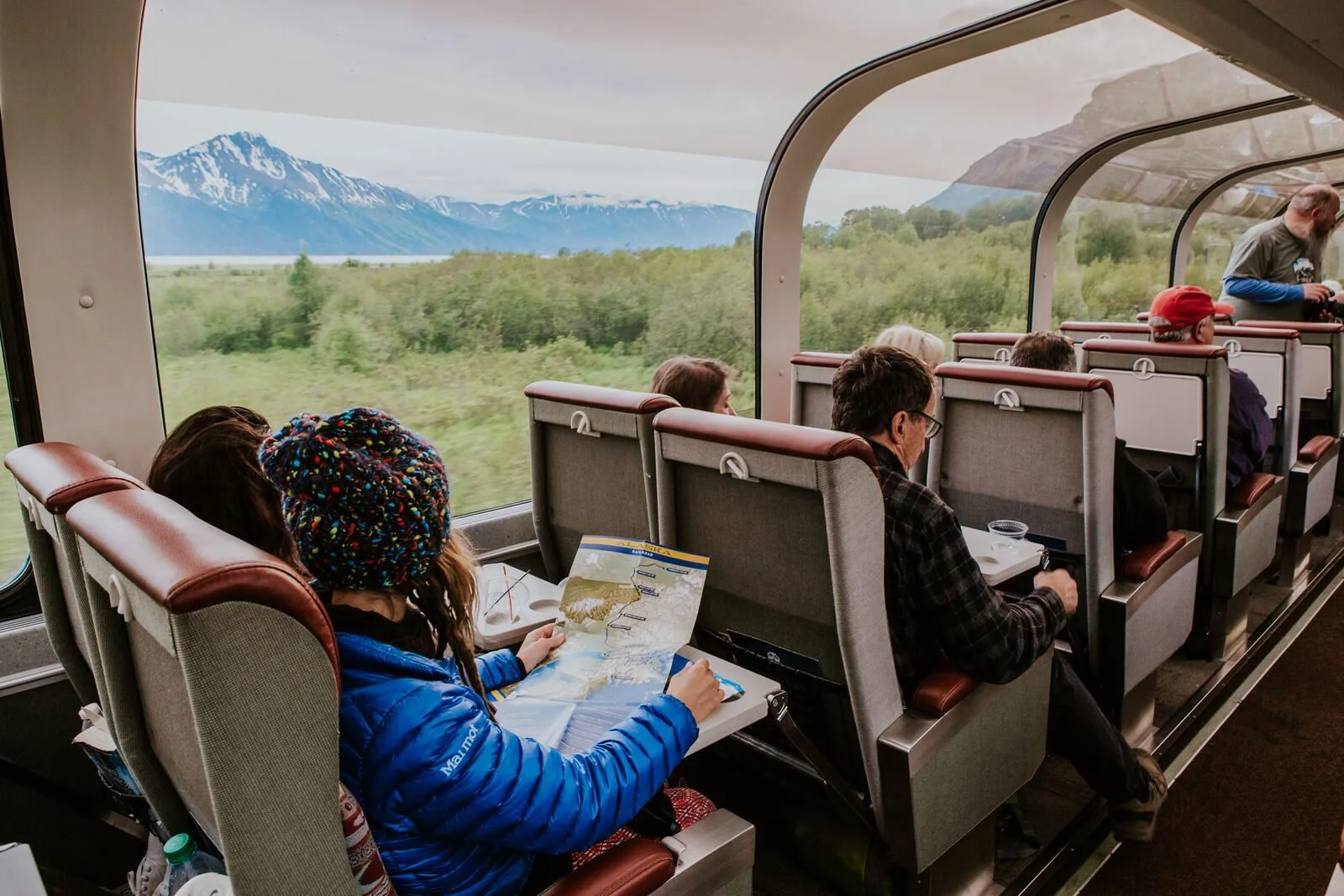
Alaska Railroad: Connects Anchorage, Talkeetna, Denali, and Fairbanks
Park Connection: Budget shuttle service between Anchorage, Talkeetna, Denali, and Seward ($65–$95 per person)
Local buses: Anchorage has the "People Mover" bus system ($2 per ride)
Affordable Accommodations in Alaska
Lodging is typically the second-biggest expense. Here's how to cut costs.
Hostels
Alaska has excellent hostels, especially in tourist areas.
Average cost: $30–$50 per night for a dorm bed
Best locations: Bent Prop Inn and Spenard Hostel (Anchorage), Moby Dick Hostel (Seward), Talkeetna Hostel, Denali Mountain Morning Hostel
Bonus: Hostels often have kitchens, social atmospheres, and great local knowledge.
Camping
If you're comfortable camping, this is the most budget-friendly option.
Campground costs: $10–$30 per night
Free camping: Available on public lands (BLM, Forest Service areas)
Best areas: Chugach National Forest, Denali area, Kenai Peninsula, Chena River State Recreation Area
Pro tip: Some campgrounds have first-come, first-served sites at lower rates than reservable sites.
Budget Hotels and Motels
Look for older motels on the outskirts of towns
Chain budget hotels (Super 8, Motel 6)
Average costs: $80–$120/night shoulder season, $150–$250/night peak season
Book rooms with kitchenettes to save on food
Vacation Rentals
For groups of 3–4+, vacation rentals can actually be cheaper than hotels.
Platforms: Airbnb, VRBO
Average costs: $100–$200/night (split 4 ways = $25–$50 per person)
Full kitchens mean significant food savings
Eating on a Budget in Alaska
Food costs in Alaska are higher than the Lower 48, but you can keep expenses reasonable.
Grocery Shopping Strategy
Best stores: Fred Meyer (best overall), Walmart (competitive on basics), Costco (great for groups)
Alaska-specific tips:
Skip the "fresh" produce (it's flown in and expensive)
Buy frozen vegetables instead
Stock up in Anchorage before heading to remote areas
Estimated daily food costs (self-catering): $20–$35 per person
Restaurant Strategies
Lunch instead of dinner: 30–40% less than dinner prices
Happy hour deals: Anchorage has great options
Food trucks: Excellent and affordable
Share plates: Alaska portions are generous
Estimated costs:
Budget meal: $8–$12
Mid-range meal: $15–$25
Nice dinner: $30–$50+
Free and Cheap Things to Do in Alaska
Alaska has incredible free experiences if you know where to look.
Free Hiking and Nature
Best free hikes near Anchorage:
Flattop Mountain – Stunning 360° views
Tony Knowles Coastal Trail – 11 miles of paved coastal walking
Byron Glacier Trail – Easy glacier views
Thunderbird Falls – Short hike to waterfall
Best free hikes near Seward:
Exit Glacier area trails – Multiple free trails with glacier views
Two Lakes Trail – Easy forest loop
Best free hikes in Denali area:
Multiple trail options near park entrance (no bus tour needed)
Free Scenic Drives
Seward Highway: One of America's most scenic drives—completely free
Denali Park Road (Mile 0–15): Drive yourself without paying for a bus tour
Hatcher Pass: Stunning mountain drive with old mining history
Glenn Highway: Gorgeous drive with mountain and glacier views
Free Wildlife Viewing
Potter Marsh (Anchorage): Boardwalk trail for bird watching
Beluga Point: Free roadside pullout to watch for beluga whales (summer)
Bird Point and Windy Point: Free stops along Seward Highway
Self-Guided Glacier Viewing
Exit Glacier (Seward): Free to access via short trails
Portage Glacier: Minimal parking fee
Matanuska Glacier: $30 entrance fee (much cheaper than guided tours)
Byron Glacier: Free access via short hike
Budget-Friendly Alaska Tours
Some experiences are worth every penny — you just need to choose wisely.
When Tours Are Worth It
Certain activities are impossible or unsafe to do independently:
Boat tours (Kenai Fjords, Prince William Sound)
Flightseeing
Bear viewing
Rafting
Northern Lights tours (winter)
For these, look for value rather than trying to skip them entirely.
How to Save on Tours
Book shoulder season: Same tours, 20–30% less expensive
Look for combo deals: Multiple tours from one operator = discounts
Group discounts: Traveling with 4+ people? Ask about group rates
Choose shorter tours: A 4-hour boat tour instead of 8-hour saves $100+ and still delivers great experiences
Best Value Tours
Kenai Fjords half-day cruises ($150–$200) — Shorter than full-day but still incredible. Browse Kenai Fjords tours →
Denali bus tours ($100–$140) — Incredible value for wildlife viewing deep in the park. See Denali tour options →
Northern Lights tours ($100–$150) — Winter only, but completely unforgettable. View Northern Lights tours →
Splurge-Worthy Experiences
If your budget allows one splurge, these are worth it:
Flightseeing with glacier landing ($300–$450) — K2 Aviation Flightseeing Tours →
Bear viewing fly-in ($600–$800) — Expensive but bucket-list worthy
Helicopter tours ($400–$600) — Alaska Helicopter Tours →
Sample Budget Alaska Itineraries
7-Day Budget Summer Trip
Estimated total: $1,690–$1,990 per person (including flights)
Day Accommodation Food Activity Daily Total 1 – Anchorage Hostel ($40) Groceries ($25) Coastal Trail (free) $65 2 – Seward Camping ($20) Self-catered ($25) Seward Highway + Exit Glacier (free) $45 3 – Seward Camping ($20) Self-catered ($25) Kenai Fjords boat tour ($180) $225 4 – Talkeetna Hostel ($45) Self-catered ($30) Scenic drive (free) $75 5 – Talkeetna Hostel ($45) Self-catered ($30) Hikes + town (free) $75 6 – Denali Camping ($25) Self-catered ($30) Denali bus tour ($130) $185 7 – Depart — $20 — $20
Trip subtotal: $690 + Rental car ($350) + Gas ($150) + Flights ($500–$800) = $1,690–$1,990
5-Day Budget Winter Trip (Northern Lights)
Estimated total: $1,200–$1,500 per person (including flights)
Day Accommodation Food Activity Daily Total 1 – Fairbanks Budget hotel ($90) Self-catered ($25) Explore downtown (free) $115 2 – Fairbanks Budget hotel ($90) Self-catered ($25) Northern Lights tour ($120) $235 3 – Fairbanks Budget hotel ($90) Self-catered ($25) Dog sledding ($100) + aurora viewing $215 4 – Fairbanks Budget hotel ($90) Self-catered ($25) Chena Hot Springs ($20) $135 5 – Depart — — — —
Trip subtotal: $700 + Flights ($500–$800) = $1,200–$1,500
See our Northern Lights tours → for affordable aurora experiences in Fairbanks and beyond.
Money-Saving Tips and Hacks
Get a National Parks Pass ($80 annual — pays for itself if visiting multiple parks)
Check for free museum days — First Fridays at some Anchorage museums
Travel light to avoid airline baggage fees
Use credit card points — Alaska Airlines card earns points fast
Book refundable options — Alaska weather is unpredictable
Join tour company email lists — first to know about sales
What NOT to Skimp On
Some things are worth paying for:
Good rain gear — Alaska weather is wet; being miserable costs more than a decent jacket
Warm layers — Especially for winter travel
Travel insurance — Medical emergencies in remote Alaska are expensive
Bear spray — If hiking in bear country
Reputable tour operators — Cheap tours can be unsafe or disappointing
Common Budget Travel Mistakes to Avoid
Mistake 1: Trying to See Everything Alaska is enormous. Pick 2–3 areas and explore them thoroughly.
Mistake 2: Booking Last-Minute Unlike some destinations, Alaska usually gets more expensive closer to travel dates. Book flights and major tours 3–6 months ahead.
Mistake 3: Underestimating Distances "Only 150 miles" can be 3–4 hours of driving in Alaska. Build realistic drive times into your schedule.
Mistake 4: Skipping Shoulder Season May and September offer better weather than you'd expect—and much lower costs.
Mistake 5: Eating Out for Every Meal Cook breakfast and lunch, eat out for dinner occasionally.
Is Budget Alaska Travel Worth It?
Absolutely.
You might camp instead of staying in luxury lodges. You might pack sandwiches instead of eating restaurant lunches. You might drive yourself instead of taking guided shuttles.
But you'll still see glaciers calving. You'll still watch grizzly bears in Denali. You'll still experience the Northern Lights. You'll still feel the magnitude of Alaska's wilderness.
Budget travel in Alaska isn't about sacrificing experiences — it's about being strategic with your spending so you can afford to be here in the first place.
Frequently Asked Questions
How much does a budget Alaska trip cost? For a 7-day summer trip: $1,500–$2,500 per person (including flights). For a 5-day winter trip: $1,000–$1,500 per person.
What's the cheapest month to visit Alaska? May and September offer the best value. Winter (November–March, excluding holidays) has the lowest absolute prices but limited activities.
Can you visit Alaska without a car? Yes, but it limits flexibility. You'll need to combine public shuttles, trains, and tours. Works better for winter Northern Lights trips based in one city.
Are Alaska tours worth the money on a budget? Some are. Kenai Fjords boat tours, Denali bus tours, and Northern Lights tours deliver experiences you can't replicate independently.
How much should I budget for food in Alaska? $20–$35/day if you cook most meals. $50–$75/day if you eat out regularly.
Can you see the Northern Lights on a budget? Absolutely. Winter travel is much cheaper, and you can even view aurora independently — though tours improve your success rate significantly.
Read our complete Northern Lights Guide →
Ready to Plan Your Budget Alaska Adventure?
Alaska doesn't have to be a once-in-a-lifetime trip reserved for when you win the lottery. With smart planning and the right tours, you can experience everything that makes Alaska magical without going broke.
The glaciers don't care if you're staying in a hostel or a luxury lodge. The Northern Lights shine just as bright whether you spent $5,000 or $1,500 on your trip.
Alaska is waiting — and it's more affordable than you think.
Browse Affordable Alaska Tours →
Not sure where to start? Contact us — we're happy to help you build an itinerary that fits your budget.